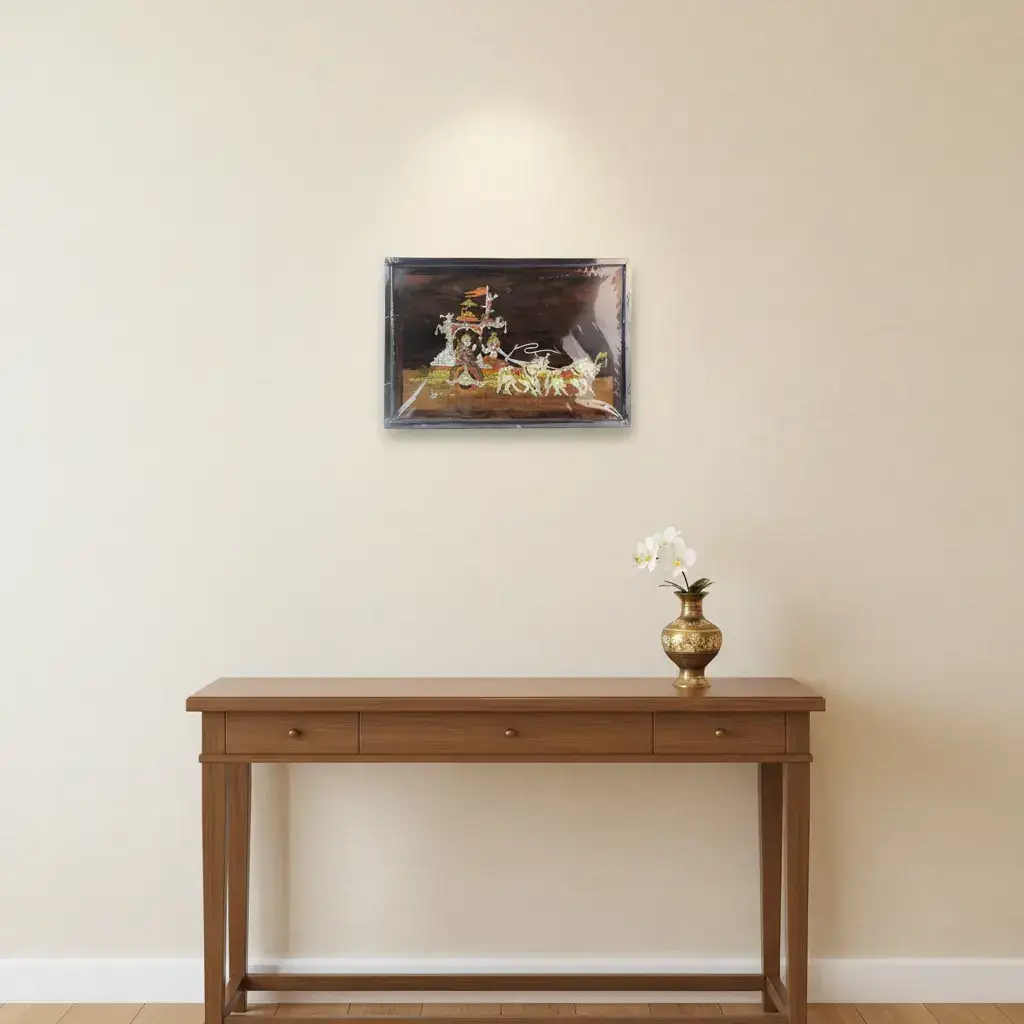
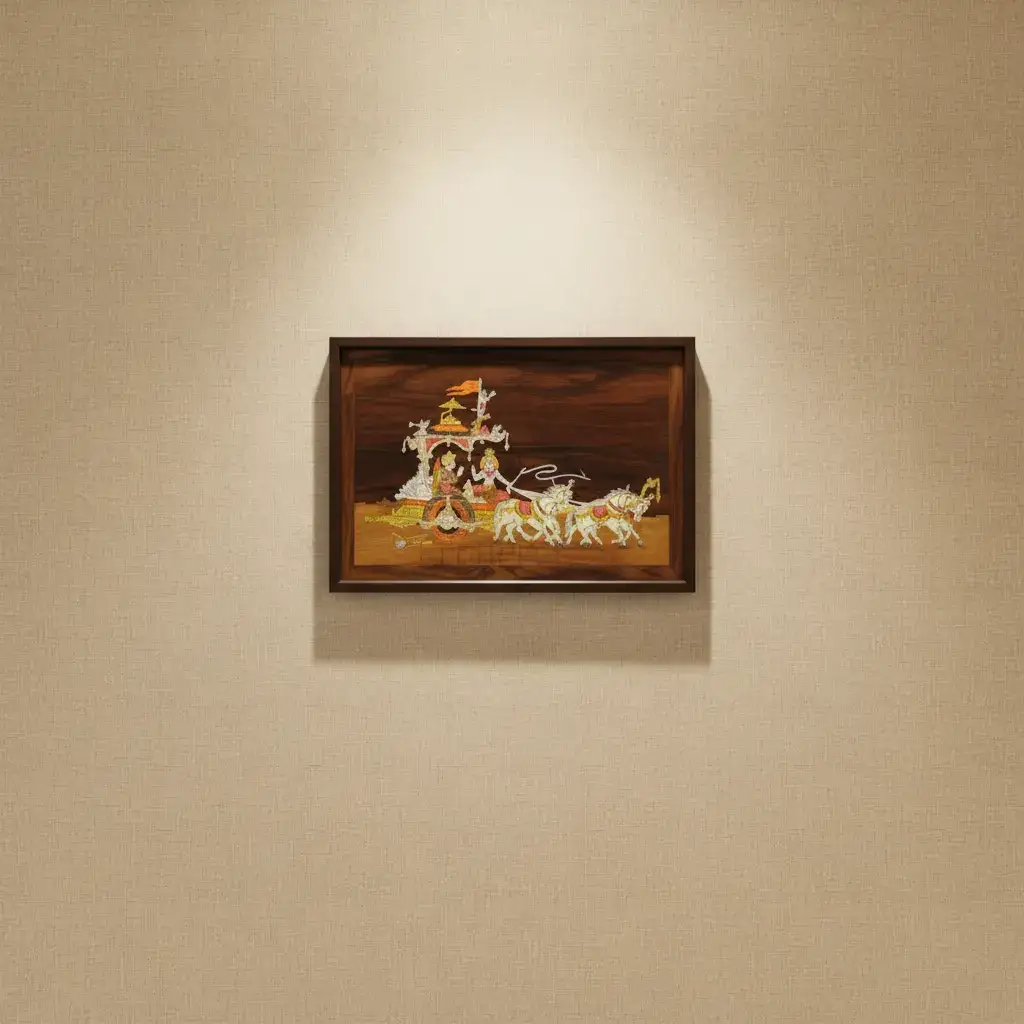


Gita Upadesh Inlay Art – Krishna and Arjuna Scene in Rosewood Frame
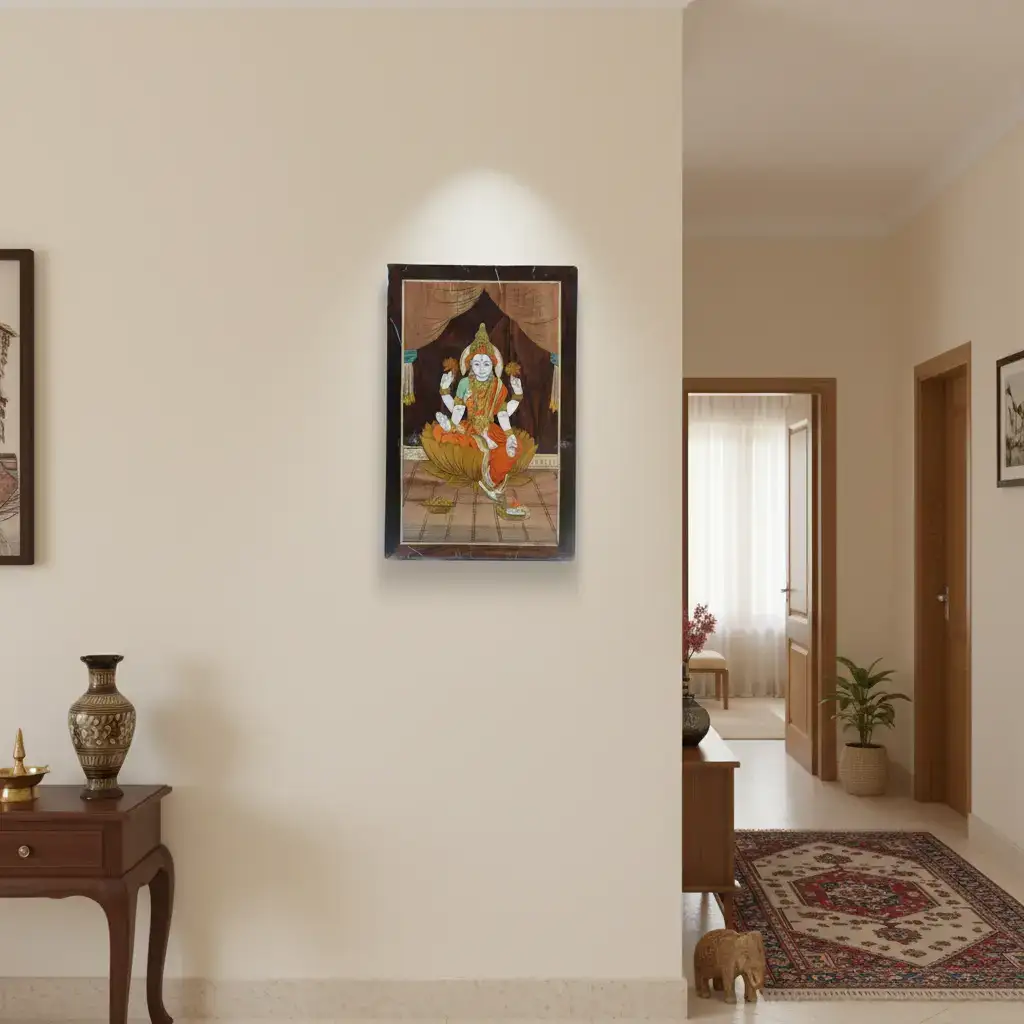
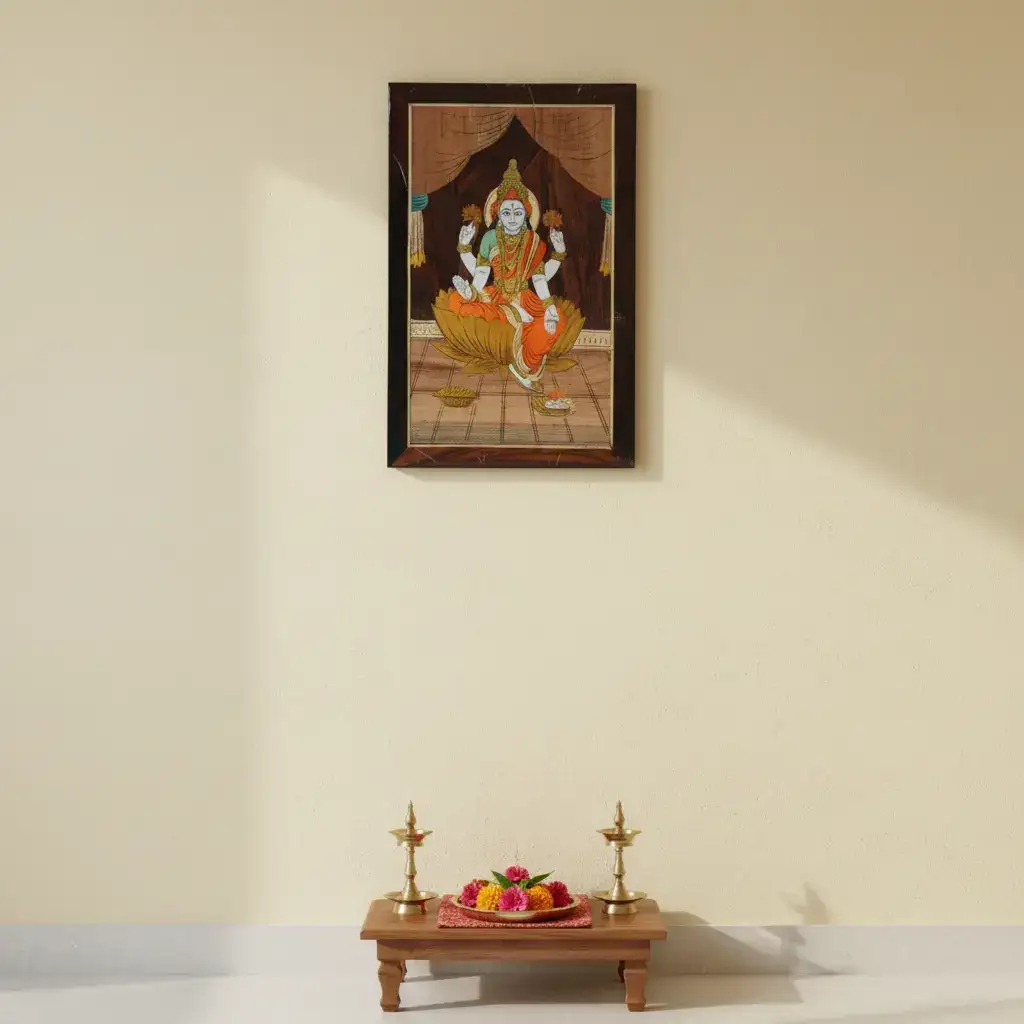
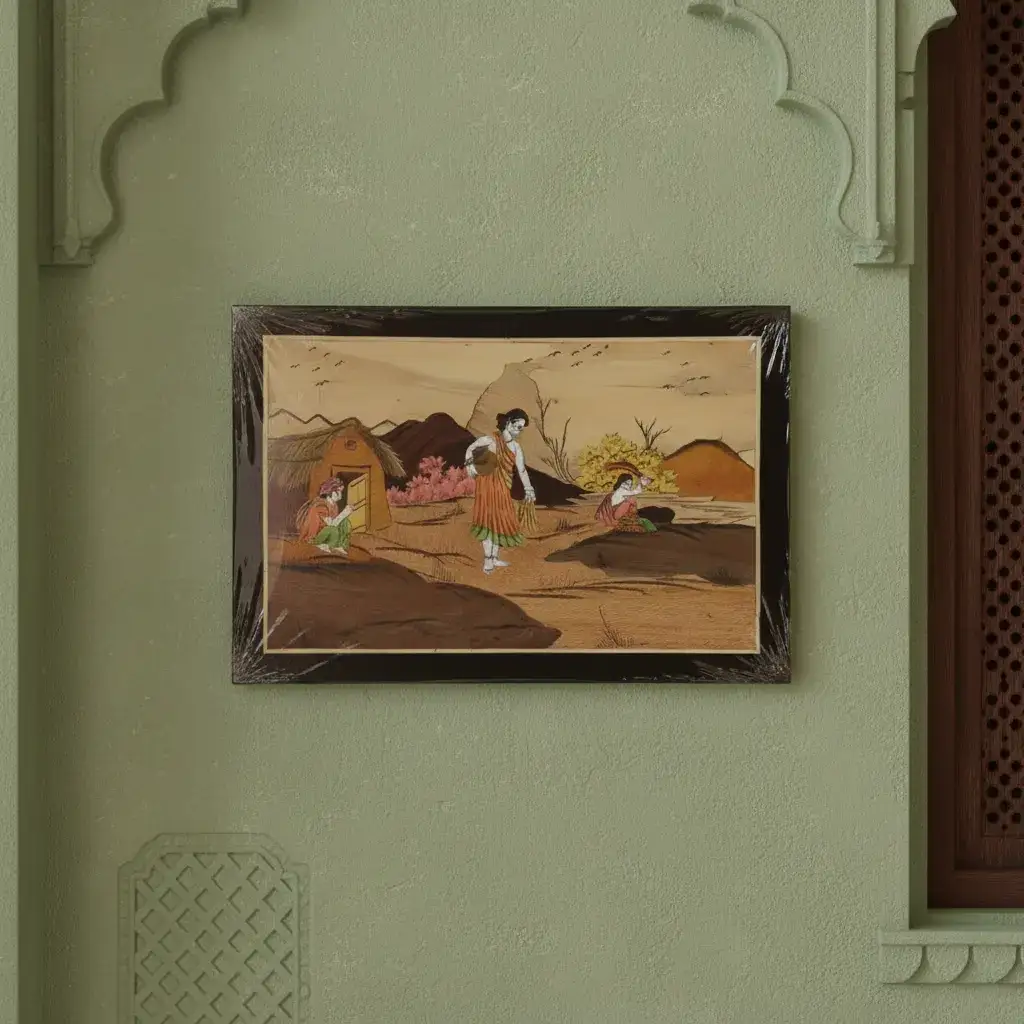
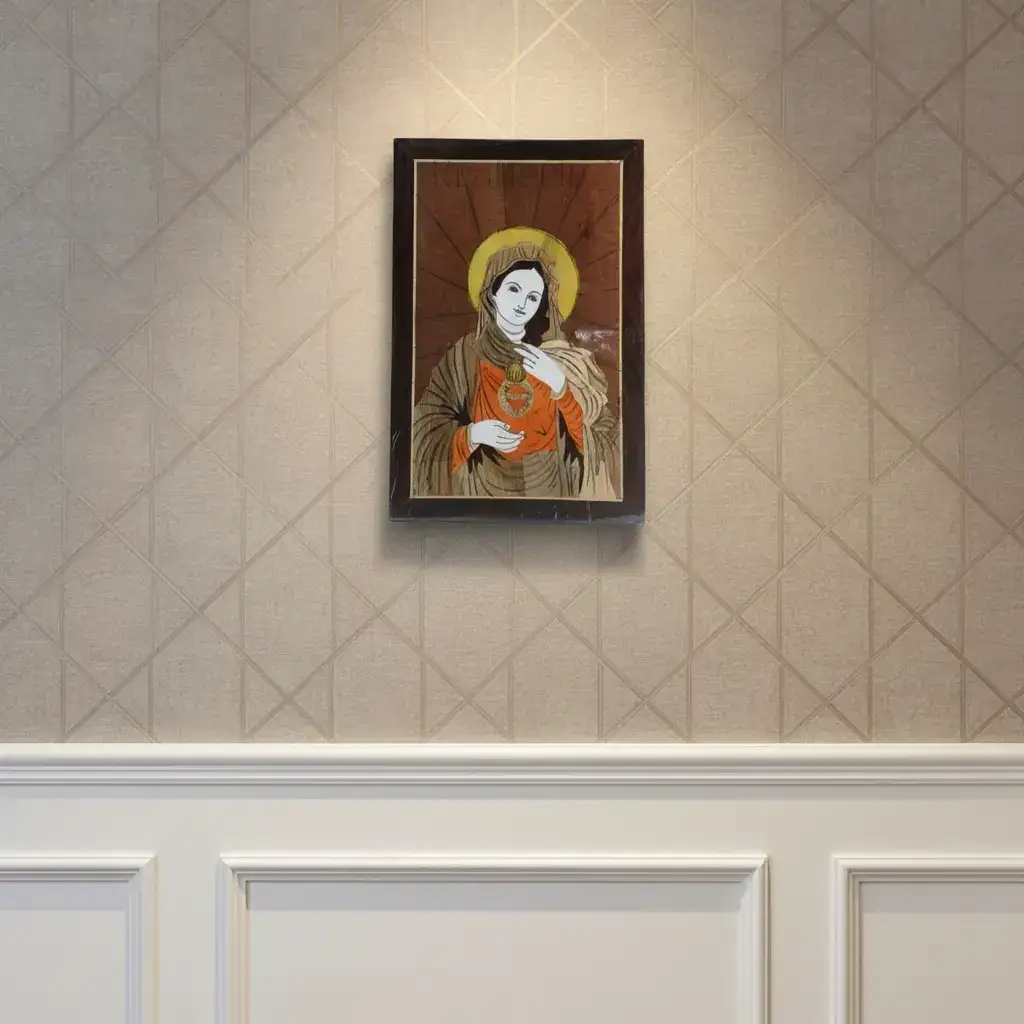
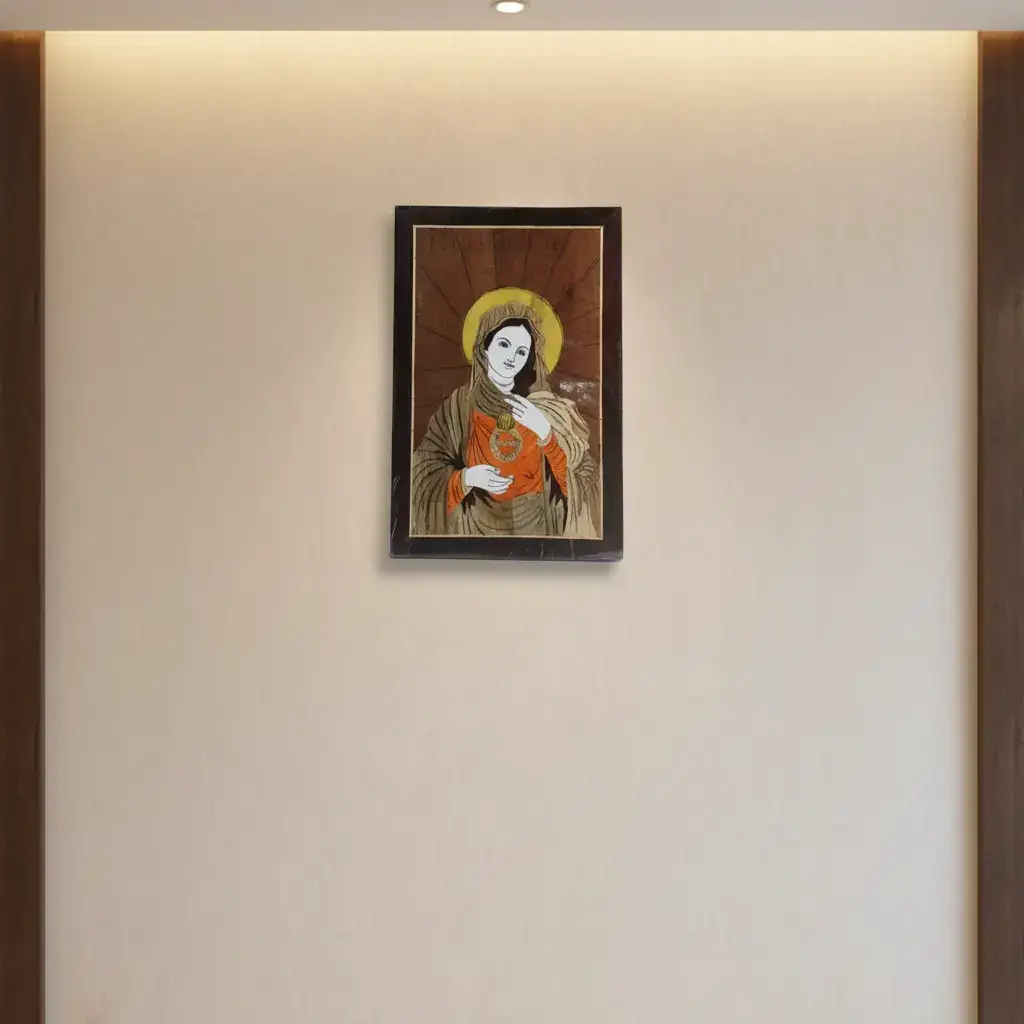
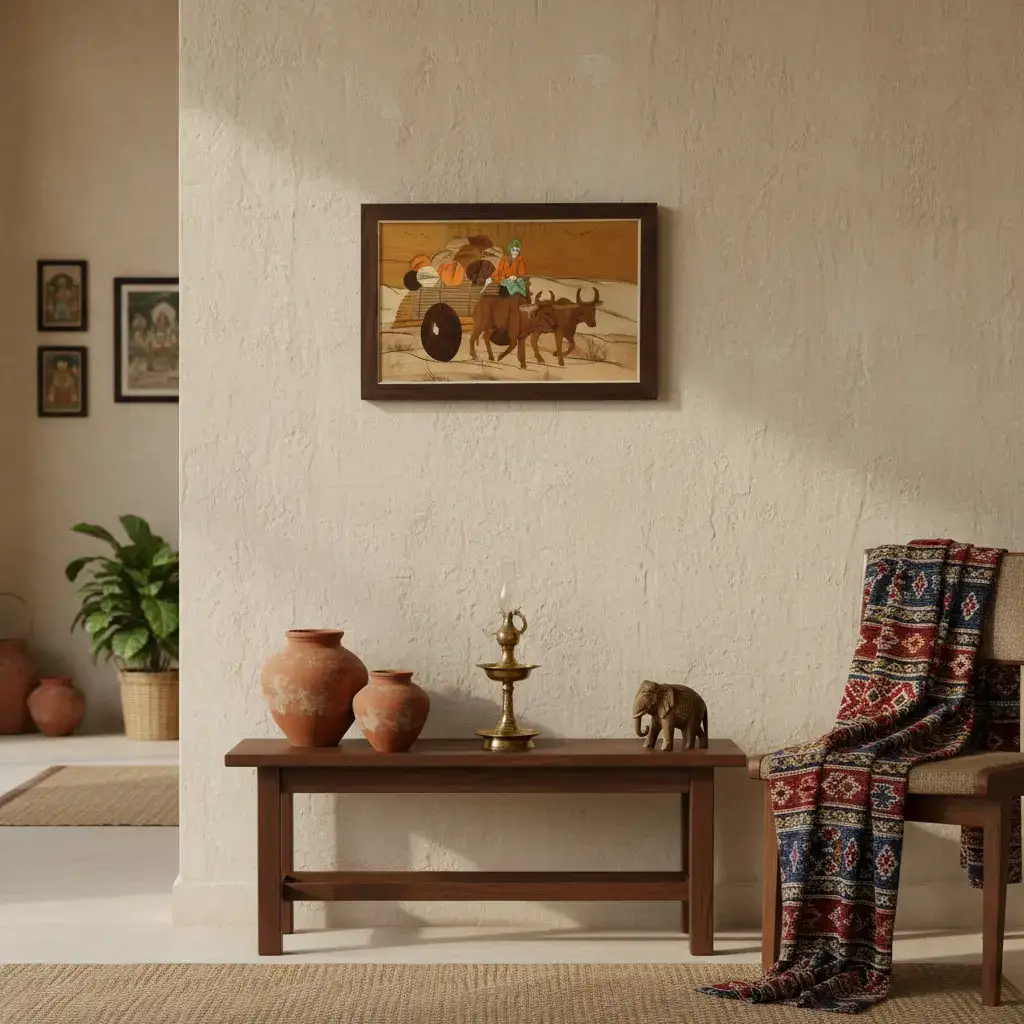
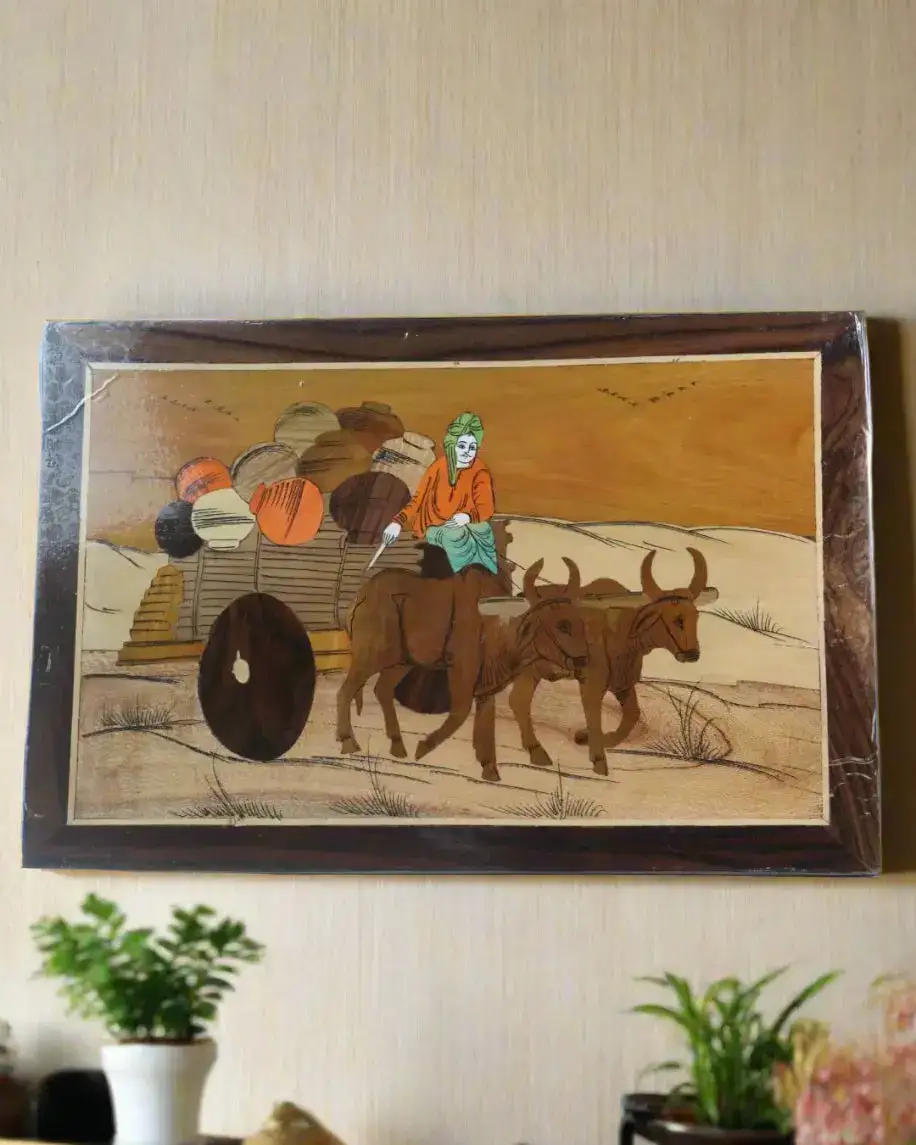
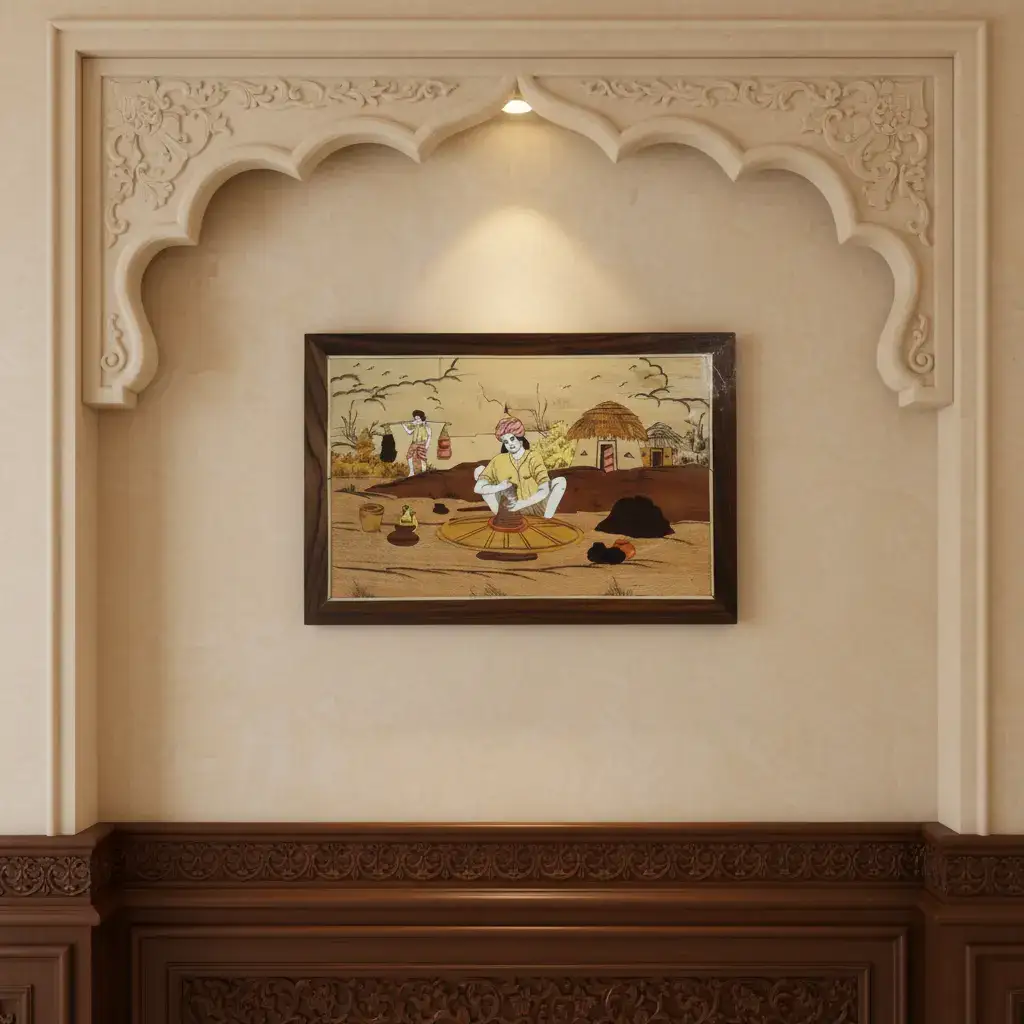
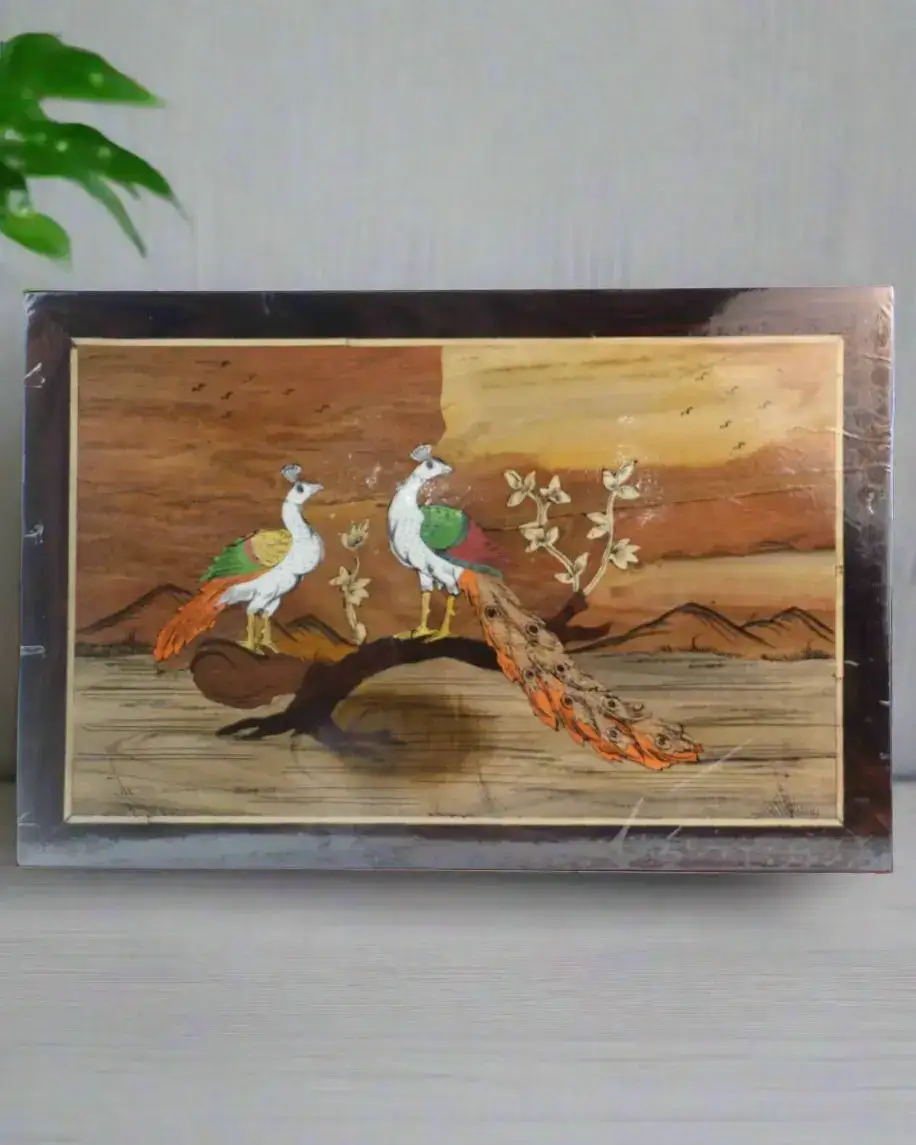
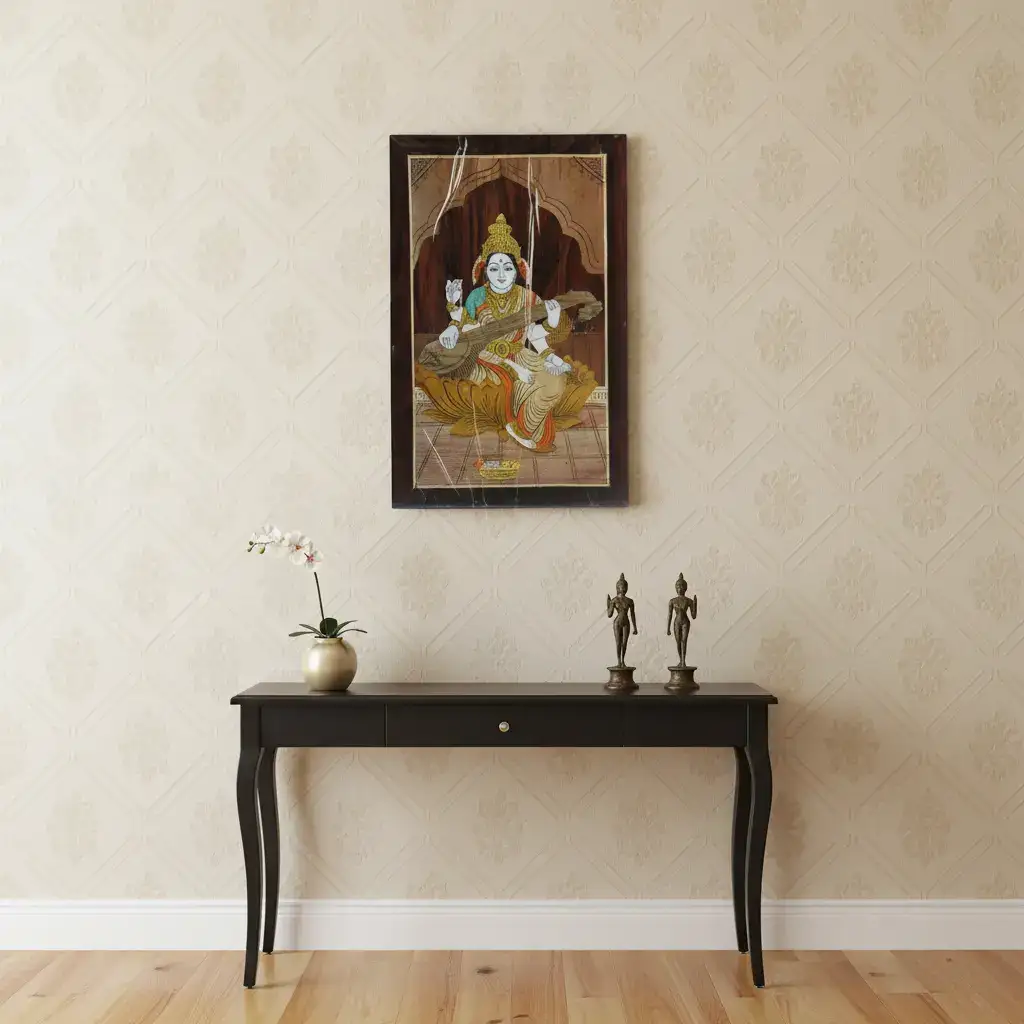
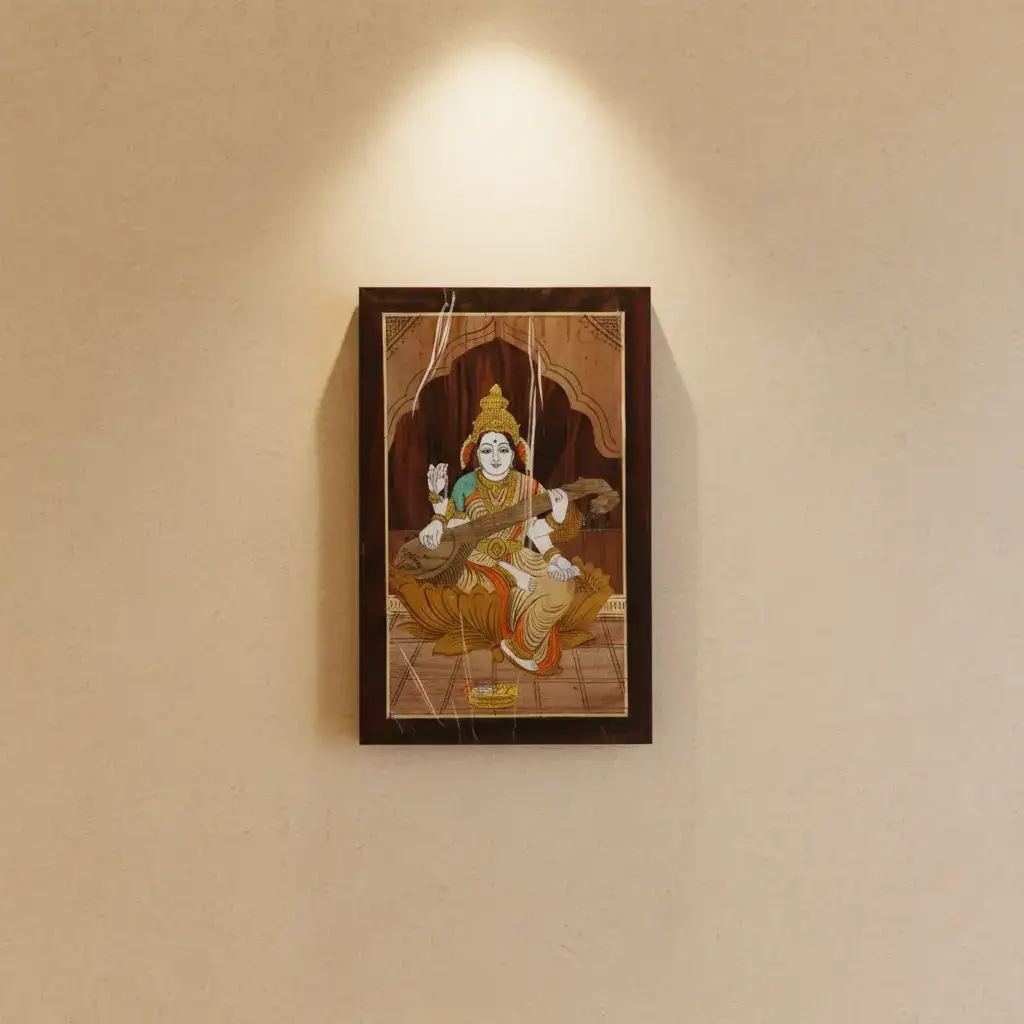
Gita Upadesh Inlay Art is a deeply cherished tradition rooted in the Mysore rosewood inlay craft. This exquisite art form features intricate motifs created by embedding small pieces of colored wood and ivory-like materials into a fine rosewood surface. Originating from Karnataka, India, this craft embodies a rich heritage of artistic mastery passed down through generations.
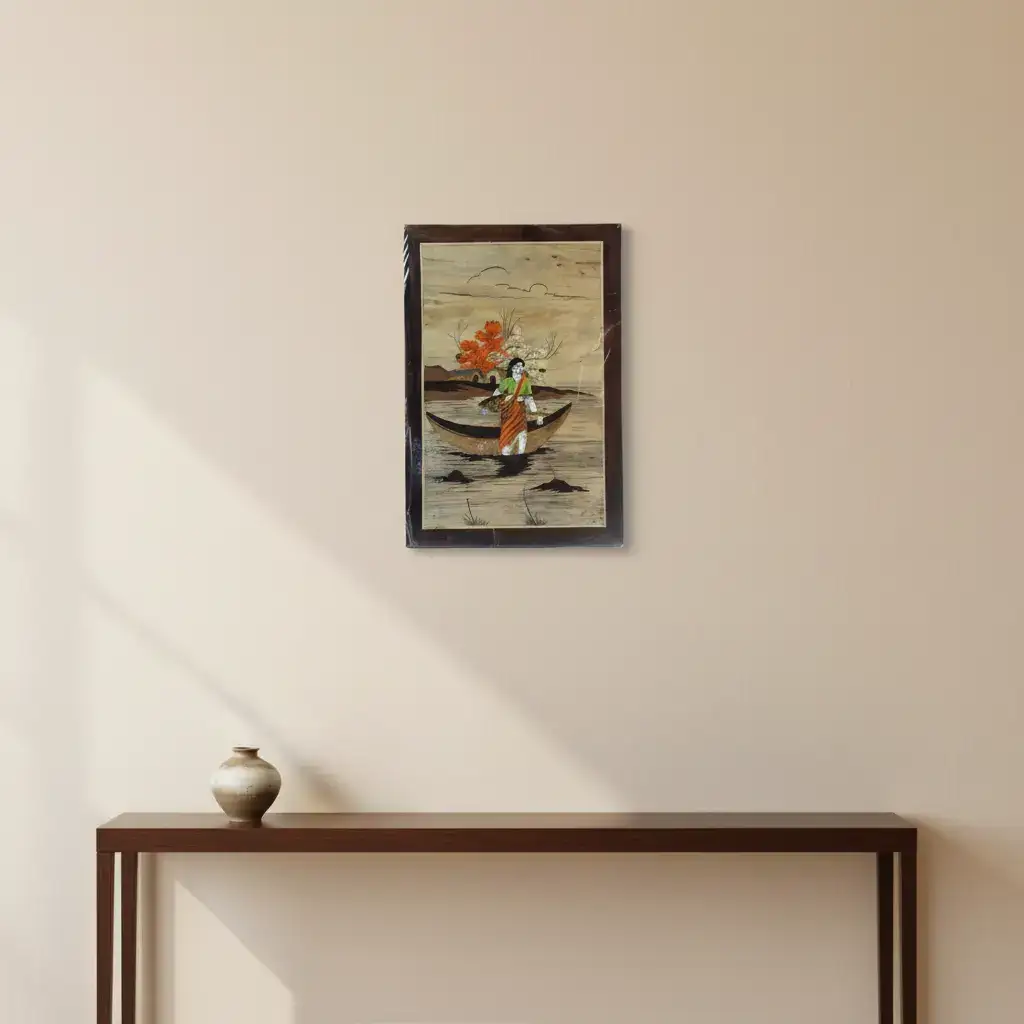
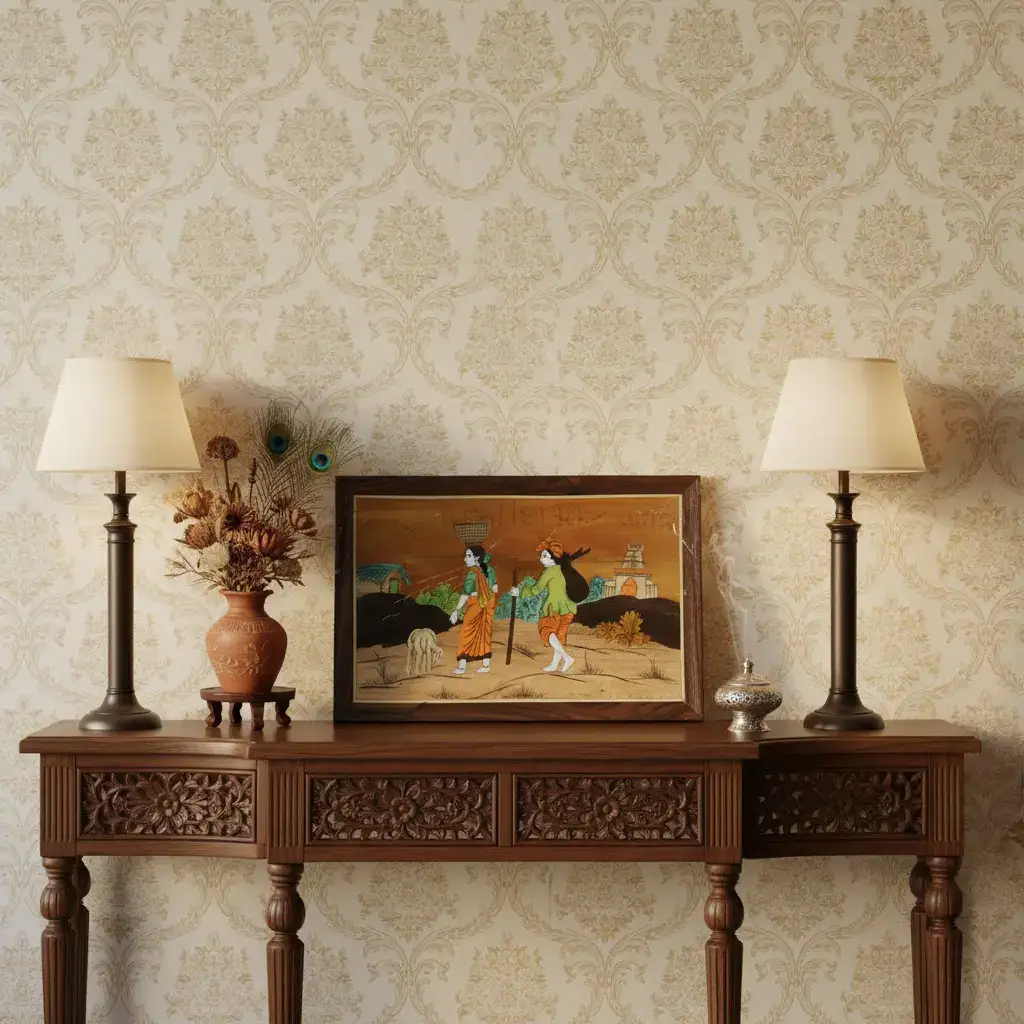
The dimensions of this artwork are carefully designed to fit various spaces with elegance. It measures 18.5 inches in width and 12.10 inches in height, making it ideal for decorative use in homes and offices alike. The beautifully crafted inlay frame enhances the artwork’s appeal, providing a classic finish that complements any decor style.
Historical Background of Gita Upadesh Inlay Art
The tradition of Mysore rosewood inlay dates back several centuries. It reflects a unique blend of indigenous Indian craftsmanship and foreign artistic influences. The techniques used in the Inlay Art reveal clear Persian inspirations, which add complexity and beauty to the designs.
Many prominent historical patrons supported this craft, including Tipu Sultan and the Wodeyar dynasty. The 18th century marked a golden era when Srirangapatna became the epicenter of rosewood and ivory inlay work. The Mysore Maharajas played a vital role in promoting this technique and commissioned intricate pieces adorned with elegant inlay frames.
These royal commissions decorated the Mysore Palace and other historic residences, preserving the art form’s legacy. This period gave the craft much of its distinctive character and cultural significance.
The Artistry Behind Gita Upadesh Inlay Art
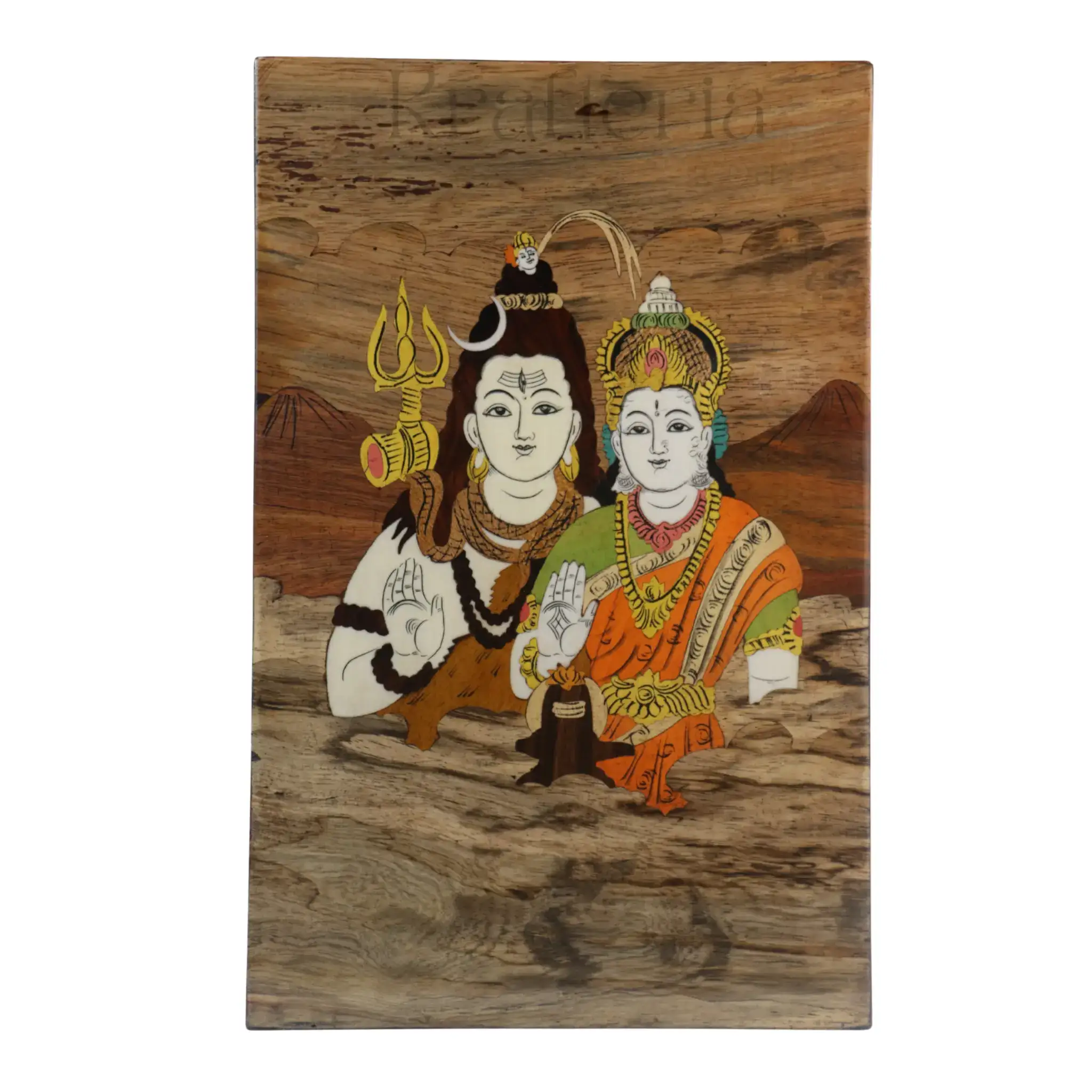
The creation process involves embedding finely cut pieces of differently colored woods and historically ivory into a rosewood base. Each element is carefully shaped and fitted by skilled craftsmen to produce vibrant and harmonious patterns. The artwork depicts traditional themes with great care and precision.
This form of Inlay Art requires patience, precision, and a deep understanding of design principles. Craftsmen spend hours or even days perfecting a single piece to ensure flawless details. The true value lies in the careful balance of color, texture, and design harmony achieved through this technique.
Each piece becomes a visual narrative that conveys mythological and cultural stories. Typically, the Gita Upadesh Inlay Art depicts the sacred dialogue between Krishna and Arjuna through symbolic representation. This storytelling element enriches the artwork’s spiritual significance.
Modern-Day Relevance and Cultural Significance
Today, the Inlay Art continues to flourish through the dedication of talented artisans. This traditional craft extends beyond wall decor, influencing furniture designs and household items. These objects often feature intricate wood inlays and are framed using the classic inlay frame style, which preserves their cultural heritage.
The art form has earned a Geographical Indication (GI) tag, ensuring authenticity tied directly to its Mysore origin. This GI status helps protect traditional knowledge and supports the economic well-being of local artisans.
Moreover, the GI tag highlights the cultural importance of these masterpieces nationwide, encouraging greater appreciation and support for their ongoing preservation in modern times.
Why Collectors and Enthusiasts Value Gita Upadesh Inlay Art
The blend of traditional technique and artistic expression makes Inlay Art highly sought after by collectors worldwide. Each handcrafted piece reflects not only the artisan’s skill but also an intricate cultural tapestry.
This art form combines aesthetics with functionality. It serves as a decorative and meaningful addition to any living or working space. Collectors appreciate how the inlay frame complements the intricate detail, offering visual harmony between the piece and its display environment.
The enduring appeal lies in its timeless beauty and deep spiritual connection to the stories it portrays. This spiritual aspect enriches its value beyond mere decoration, making it a treasured possession for any art lover.
Preserving the Legacy of Mysore Rosewood Inlay
The survival of Inlay Art depends on the dedication of skilled artisans who continue to practice and innovate within traditional frameworks. Workshops in Karnataka provide ongoing training and support for new generations, ensuring the craft remains vibrant and relevant.
Modern innovations introduced ethically sourced synthetic ivory-like materials. This helps preserve intricate details while respecting ecological concerns. This harmonious blend of tradition and modernity guarantees the craft’s authentic evolution.
The Inlay Art tradition brings cultural pride to Karnataka and connects art lovers worldwide to a unique heritage. Through continued patronage and appreciation, these artistic treasures will remain cherished for generations to come.
Original: $2,699.00
-70%$2,699.00
$809.70Product Information
Product Information
Shipping & Returns
Shipping & Returns
Description
Gita Upadesh Inlay Art is a deeply cherished tradition rooted in the Mysore rosewood inlay craft. This exquisite art form features intricate motifs created by embedding small pieces of colored wood and ivory-like materials into a fine rosewood surface. Originating from Karnataka, India, this craft embodies a rich heritage of artistic mastery passed down through generations.
The dimensions of this artwork are carefully designed to fit various spaces with elegance. It measures 18.5 inches in width and 12.10 inches in height, making it ideal for decorative use in homes and offices alike. The beautifully crafted inlay frame enhances the artwork’s appeal, providing a classic finish that complements any decor style.
Historical Background of Gita Upadesh Inlay Art
The tradition of Mysore rosewood inlay dates back several centuries. It reflects a unique blend of indigenous Indian craftsmanship and foreign artistic influences. The techniques used in the Inlay Art reveal clear Persian inspirations, which add complexity and beauty to the designs.
Many prominent historical patrons supported this craft, including Tipu Sultan and the Wodeyar dynasty. The 18th century marked a golden era when Srirangapatna became the epicenter of rosewood and ivory inlay work. The Mysore Maharajas played a vital role in promoting this technique and commissioned intricate pieces adorned with elegant inlay frames.
These royal commissions decorated the Mysore Palace and other historic residences, preserving the art form’s legacy. This period gave the craft much of its distinctive character and cultural significance.
The Artistry Behind Gita Upadesh Inlay Art
The creation process involves embedding finely cut pieces of differently colored woods and historically ivory into a rosewood base. Each element is carefully shaped and fitted by skilled craftsmen to produce vibrant and harmonious patterns. The artwork depicts traditional themes with great care and precision.
This form of Inlay Art requires patience, precision, and a deep understanding of design principles. Craftsmen spend hours or even days perfecting a single piece to ensure flawless details. The true value lies in the careful balance of color, texture, and design harmony achieved through this technique.
Each piece becomes a visual narrative that conveys mythological and cultural stories. Typically, the Gita Upadesh Inlay Art depicts the sacred dialogue between Krishna and Arjuna through symbolic representation. This storytelling element enriches the artwork’s spiritual significance.
Modern-Day Relevance and Cultural Significance
Today, the Inlay Art continues to flourish through the dedication of talented artisans. This traditional craft extends beyond wall decor, influencing furniture designs and household items. These objects often feature intricate wood inlays and are framed using the classic inlay frame style, which preserves their cultural heritage.
The art form has earned a Geographical Indication (GI) tag, ensuring authenticity tied directly to its Mysore origin. This GI status helps protect traditional knowledge and supports the economic well-being of local artisans.
Moreover, the GI tag highlights the cultural importance of these masterpieces nationwide, encouraging greater appreciation and support for their ongoing preservation in modern times.
Why Collectors and Enthusiasts Value Gita Upadesh Inlay Art
The blend of traditional technique and artistic expression makes Inlay Art highly sought after by collectors worldwide. Each handcrafted piece reflects not only the artisan’s skill but also an intricate cultural tapestry.
This art form combines aesthetics with functionality. It serves as a decorative and meaningful addition to any living or working space. Collectors appreciate how the inlay frame complements the intricate detail, offering visual harmony between the piece and its display environment.
The enduring appeal lies in its timeless beauty and deep spiritual connection to the stories it portrays. This spiritual aspect enriches its value beyond mere decoration, making it a treasured possession for any art lover.
Preserving the Legacy of Mysore Rosewood Inlay
The survival of Inlay Art depends on the dedication of skilled artisans who continue to practice and innovate within traditional frameworks. Workshops in Karnataka provide ongoing training and support for new generations, ensuring the craft remains vibrant and relevant.
Modern innovations introduced ethically sourced synthetic ivory-like materials. This helps preserve intricate details while respecting ecological concerns. This harmonious blend of tradition and modernity guarantees the craft’s authentic evolution.
The Inlay Art tradition brings cultural pride to Karnataka and connects art lovers worldwide to a unique heritage. Through continued patronage and appreciation, these artistic treasures will remain cherished for generations to come.